Blog
EU AI Act labelling and AI comics: what 2 December 2026 changes
What Article 50 of the EU AI Act means for people who publish AI comics, what the December date covers, and a simple way to label your work.
Published November 9, 2026 · 6 min read
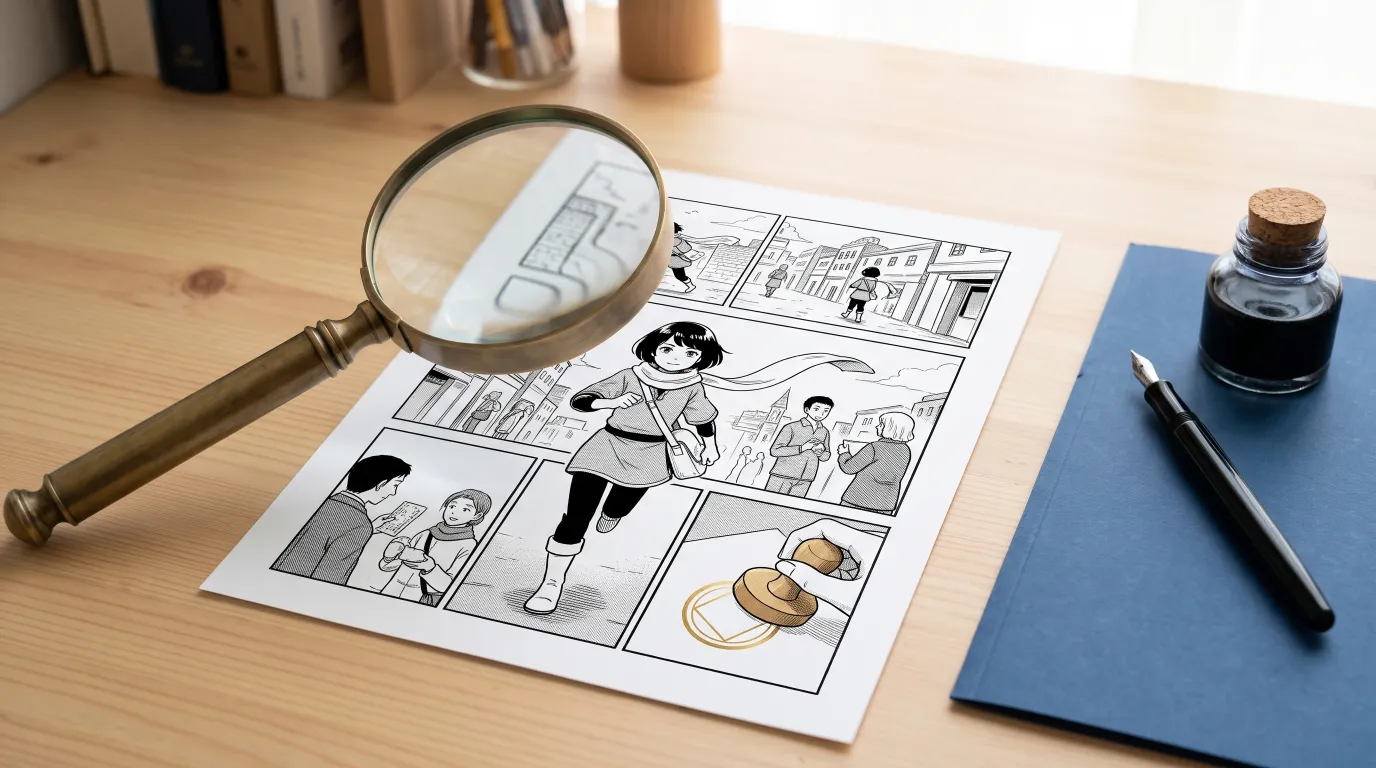
On 2 December 2026 the last part of the EU’s transparency rules for AI-generated content starts to bite, and creators are asking whether their comics now need a label. For most people who publish fictional manga or webtoons, the short answer is that the law asks less of them than the headlines suggest, and that labelling is still the right habit. Here is what Article 50 of the AI Act says, who it applies to, how it reads for comics, and a label you can copy. This is general information based on the European Commission’s published guidance, not legal advice.
The two dates that matter
Article 50 applied from 2 August 2026. An amending law, the Digital Omnibus on AI, gave one group a short delay: providers of generative AI systems already on the EU market before that day have until 2 December 2026 to mark their outputs in a machine-readable way. Systems released on or after 2 August must comply from the start. The delay covers only that marking duty. The duties on people who use AI systems were not postponed.
Providers and deployers
The law separates the people who supply AI from the people who use it, and almost everything depends on which one you are.
- A provider develops an AI system and places it on the market under its own name. Providers must mark generated images, video, audio and text so that they can be detected as AI output, and must tell people when they are talking to an AI.
- A deployer uses an AI system under its own authority. Deployers must label deepfakes and certain AI text on matters of public interest.
- Someone using AI for purely personal, non-professional purposes is not a deployer under the Act.
- A person who earns money from the activity on a regular basis, or uses it in a business, trade or freelance work, counts as a professional deployer.
The Act also reaches beyond Europe: a provider or deployer outside the EU can be covered when the output of the system is used in the EU. So a creator elsewhere with European readers should not assume the rules are irrelevant.
Most solo creators using a comic tool sit on the deployer side, because they use a system someone else built. If you build your own generator and offer it to other people under your own name, you take on the provider duties as well, and that is a different conversation to have with a lawyer.
Is an AI manga a deepfake?
Usually not. The Commission’s guidance sets three conditions that must all be met: the content closely resembles its subject; that subject is a person, object, place, entity or event that exists or plausibly could; and the content would falsely appear to be authentic or truthful. The last condition depends on context, including what the audience expects. Nobody opens a stylised manga about an invented courier expecting a photograph of real events.
There are edge cases. A photorealistic page showing a real place during an event that never happened, presented as reportage, could qualify. Even then, the rules are lighter for evidently artistic, creative, satirical or fictional work: the disclosure must be made in an appropriate way that does not spoil the work. MangaMade removes much of this risk at the source, since real, identifiable people are refused as characters.
What about the words in your comic?
The text rule is narrow. It covers AI-generated text published to inform the public on matters of public interest, such as politics, public health or justice, and it does not apply when a person has reviewed the text and holds editorial responsibility. The dialogue of a fantasy chapter is not that. An explainer comic about an election or a vaccine might be, if AI wrote the words and nobody properly reviewed them. Check the facts yourself and stand behind them.
Why label your comic anyway
Legal minimums are not the only reason. The argument over AI in comics is loud right now: cartoonists are pressing international bodies for consent over training data, and publishers have had to replace art after readers found undisclosed AI work. Platforms and contests set their own rules, often stricter than the law, and some refuse AI art altogether. MangaMade’s acceptable use policy asks you to disclose AI use when you publish, whichever country you are in. Readers forgive a clear label far more easily than a discovery.
A label you can copy
Disclosure should be clear to a person reading it, without any special tool. The Commission is explicit that a hidden, machine-readable mark does not on its own meet a deployer’s duty to disclose. Say what you did and what the AI did. One line on your credits page and in your series description is enough:
Story, script and lettering: [your name].
Panel art generated with AI and selected and edited by the author.
A short checklist before you publish
- Work out your role: hobby project, or regular income from it?
- Keep real, identifiable people and real events out of anything that could pass as true.
- Add a plain AI line to your credits and your series page.
- Use the AI label or setting of each platform you upload to, and read its rules first.
- If your comic informs people about public matters, have a person check it and take responsibility for it.
- Keep your script and notes, which also document your own contribution to the work.
- If you run a studio or sell at scale, ask a lawyer: the fines and details are beyond a blog post.
Questions this answers
- Do I have to label AI comics in the EU?
- The AI Act’s labelling duties target deepfakes and AI text on matters of public interest, so a clearly fictional comic usually falls outside them. Labelling is still wise, platforms may require it, and MangaMade’s policy asks you to disclose AI use. This is general information, not legal advice.
- What happens on 2 December 2026?
- Providers of generative AI systems that were on the EU market before 2 August 2026 must by then mark outputs in a machine-readable way. It does not create a new duty for readers or for people publishing comics.
- Does the AI Act apply to hobby creators?
- Purely personal, non-professional use is outside the deployer duties. If you earn money from the activity on a regular basis, or it is part of a business or freelance work, you can count as a professional deployer.
- Is a watermark enough to disclose AI art?
- A machine-readable mark alone does not meet a deployer’s duty to disclose, since people must be able to perceive the disclosure without special tools. A plain line in your credits is simple and clear.
Make your next chapter
Turn your story into lettered pages: model sheets for your cast, AI-drawn panels and exports in PNG, PDF, CBZ or webtoon.
Start freeKeep reading
- How to turn your novel into a manga after a November writing challenge
- How to make a manga as a Christmas gift, with a story only they would get
- Black Friday 2026 for comic creators: how to judge AI deals and promote your comic
- How to translate your manga or webtoon with AI, without redrawing it
- Make manga with an AI agent: the MangaMade MCP server and API
- AI character consistency in 2026: how reference images keep a cast on model
- Manga panel layout: how to storyboard a page that reads
- How to make a webtoon: a step-by-step guide for beginners
- How to make a manga chapter with AI, step by step
- How to keep characters consistent across panels
- Manga vs manhua vs webtoon: formats and reading direction
- Speech balloons and lettering basics for manga and comics
- How to export a comic for vertical scroll and for print
- AI art and copyright: what you own when you make comics with AI
- AI manga generator: how to turn text into manga pages