Blog
How to keep characters consistent across panels
Why AI-drawn characters drift from panel to panel, and how model sheets, a style reference, continuity references and redraws keep a cast on model.
Published September 23, 2026 · 7 min read
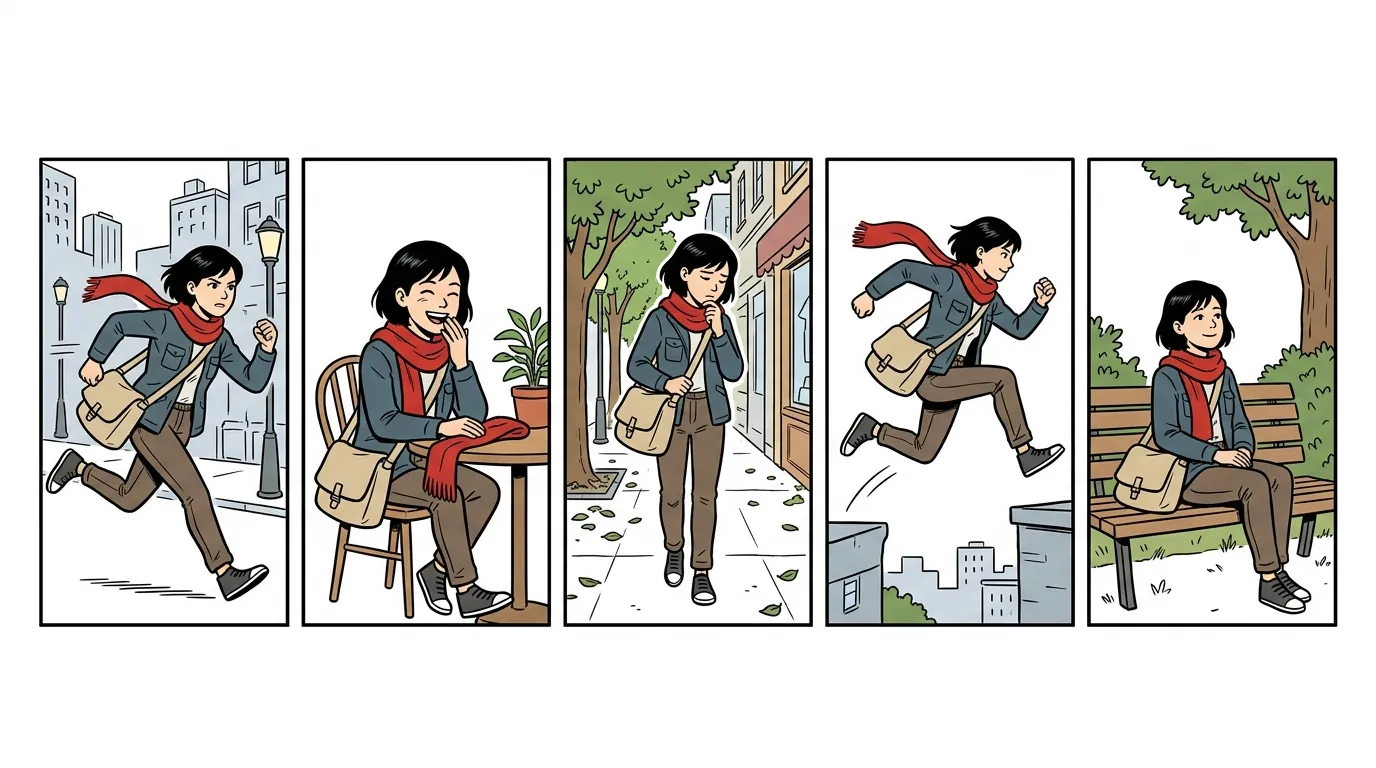
Ask an image model for the same character twice and you tend to get two cousins: the parting moves to the other side, the jacket changes colour, the scar wanders. In a single illustration nobody notices. In a chapter, where the reader follows a face across dozens of panels, it breaks the story. MangaMade keeps a cast on model with references rather than luck: every panel is drawn against pictures of the characters, of the style and of the scene. Here is how each reference works, and how to write descriptions that help them.
Why characters drift
An image model does not remember the last picture it drew. Each panel starts from its own prompt, and a prompt such as “a young woman with short hair in a jacket” fits thousands of different women. Whatever the words leave open, the model decides again every time: the shape of the face, the length of the fringe, the pattern on a scarf. Drift is worst exactly where comics need the most variety: unusual angles, strong expressions, small figures in wide shots.
The cure is to show the model the character instead of only describing them. A picture settles what words leave open, which is why every MangaMade panel is drawn with reference images.
Model sheets: one reference per character
Animation has long used model sheets to keep a character the same when many hands draw it. MangaMade makes one for each member of your cast: a single image, drawn at 2K, that shows the character full-length from the front, three-quarter, side and back, then four head shots (neutral, happy, angry and surprised) on a plain background, with no labels or text.
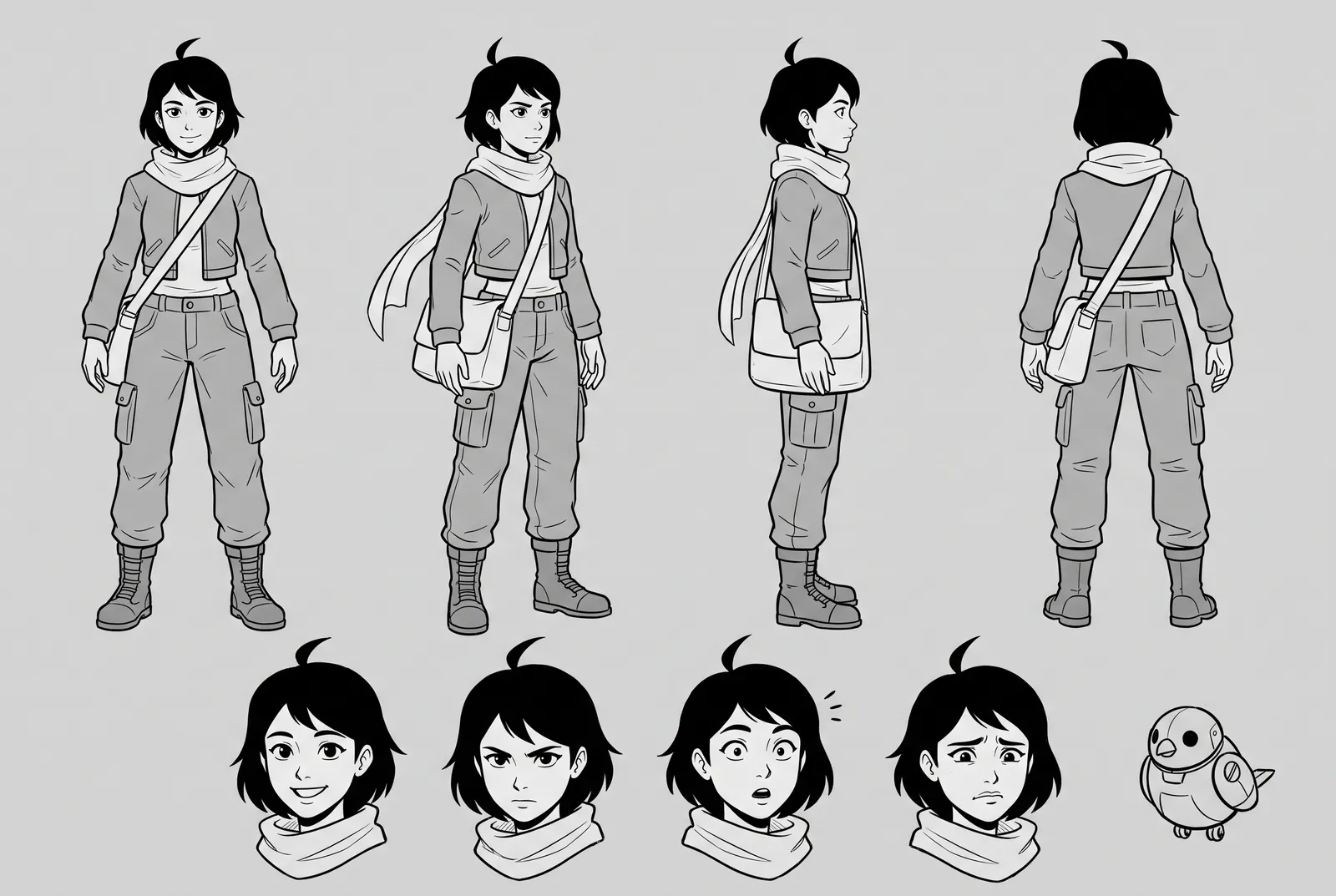
The sheet is drawn in the series style from the character’s appearance and description, and from up to four reference images if you uploaded some. It costs 2 credits. If you already have a turnaround you drew or may use, upload it as the sheet for free.
- Check the sheet before drawing panels. Every panel copies it, so a wrong detail here repeats everywhere.
- Redraw it with a note when something is off, such as “shorter hair, add the red scarf”. The current sheet stays in use until the new one is ready.
- Editing a character’s appearance does not redraw the sheet on its own. Redraw it when the change should show in new panels; panels already drawn keep their picture.
The style reference: one look for the whole series
A character can also drift through style: line weight, shading and palette shift from panel to panel even when the face is right. The series’ style reference prevents that. It is one sample panel of your story’s world, drawn in the series’ preset from your setting and tone for 1 credit, or a sample of your own uploaded for free. Every model sheet and every panel is drawn to match it.
Draw it before the model sheets, so the sheets come out in the same style as the panels. If you switch the series to another preset later, a style reference MangaMade drew in the old preset has to be redrawn before more panels are drawn, while a sample you uploaded stays in use. Panels already drawn keep their look.
Continuity references: the scene remembers
Faces are not the only thing readers track. Clothes, props, the room and the light should stay put from one panel to the next. When MangaMade draws a panel, it looks back through the chapter for the nearest earlier panel with the same setting that already has a drawing, and sends that drawing along as a reference too, with an instruction to keep places, clothes and light consistent.
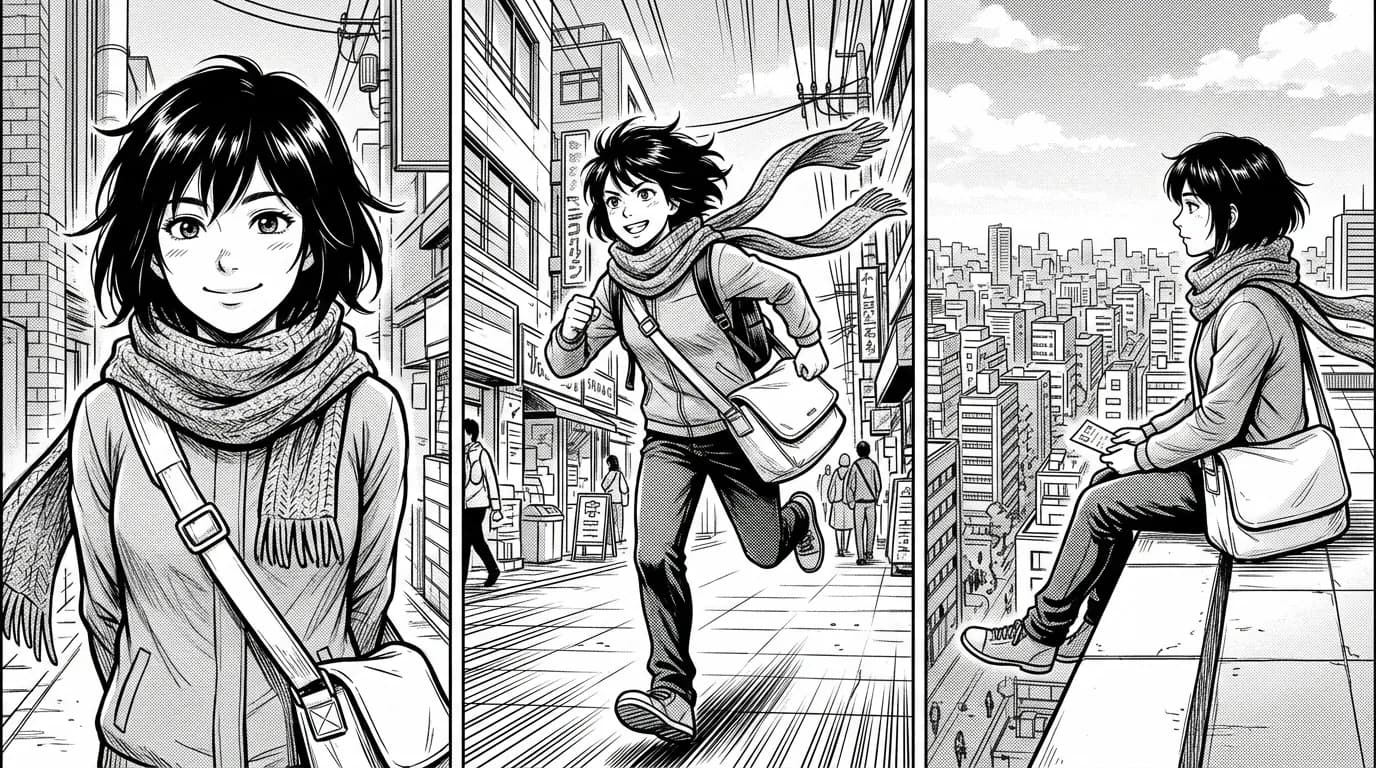
Two habits make this work better:
- Keep one wording per place. Settings are written in English and match when their text is the same, ignoring capitals and extra spaces, so write “the lighthouse kitchen at night” on every panel set there rather than a new variation each time. Check the settings when you edit the script.
- Draw the opening of a scene first. Panels drawn in the same run cannot reference each other, so drawing the first page on its own, then the rest, gives later panels a drawn panel to follow. A redraw also takes the nearest earlier drawn panel of its scene as its reference.
What each panel is drawn with
Put together, a panel starts from these references, in this order:
- The model sheet of each character in the panel, up to four. A character without a sheet falls back to their first reference image, and a panel with a character who has neither cannot be drawn yet.
- The series’ style reference.
- The continuity reference, when an earlier panel of the same scene is drawn.
The prompt then names each character with the pose, expression and place in the frame from the script, describes the shot, the setting and the action, and asks for no text at all, since the lettering is MangaMade’s own layer. A panel lists at most four characters from the cast. Extras described only in the action are drawn without a sheet, so anyone who must be recognised twice belongs in the cast.
Redraws with a note
References reduce drift; they do not remove it. When a panel comes back with the wrong eye colour or a missing prop, redraw that panel alone with a short note. A redraw costs what the panel costs, 1 credit at 1K or 2 for a splash page, and a failed one returns its credit.
- Name the fix, not the whole scene: “scar on her left cheek, as on the sheet” works better than rewriting the panel.
- Ask for one or two changes per note, so you can tell which one worked.
- Compare attempts. Each one stays in the panel’s history; the newest goes on the page, and you can put an earlier one back.
- If the same detail slips in panel after panel, fix the source: redraw the model sheet or tighten the appearance.
MangaMade does not repaint part of a panel: a redraw replaces the whole drawing, which is why a short, precise note matters.
Writing appearance descriptions that hold
The appearance fields shape the model sheet, and the planner reads them when it writes each panel’s cues. Write them in English, since they reach the image model as they are, and describe what a camera would see.
- Apparent age sets the proportions: a teenager and a middle-aged character are drawn differently even with the same hair.
- Build: a silhouette you could recognise in shadow, such as tall and wiry, slightly stooped.
- Hair: colour, length and shape, plus one detail that survives a small panel, such as a white streak over the left eye.
- Outfit: what they wear in this arc, with one colour accent. Change it on purpose, with a new sheet, not panel by panel.
- Distinguishing marks: one or two at most, such as round glasses, a thin scar across the chin or a prop they always carry.
A complete appearance can be this short, field by field (build, hair, outfit, marks):
Tall and wiry, slightly stooped. Short black hair with a white streak over the left eye. Worn brown leather jacket over a grey hoodie, red scarf. Round glasses, a thin scar across the chin.
Keep personality, history and the way they talk for the description field, where the planner uses them. Make the cast easy to tell apart: different heights, hair shapes and colour accents read faster than different faces. And describe rather than borrow: names of existing characters, franchises and real people are refused.
Questions this answers
- Do I need a model sheet for every character?
- For everyone who must be recognisable from panel to panel, yes. A panel with a character who has neither a sheet nor a reference image cannot be drawn. Passers-by and crowds can be described in the action instead; they are drawn without a reference.
- How much does it cost to keep characters consistent?
- A model sheet costs 2 credits per character and the style reference 1, both once per series, or nothing if you upload your own art. Continuity references are free. A redraw costs what the panel costs: 1 credit, or 2 for a splash page.
- Can I use my own drawings of a character?
- Yes, if you made them or may use them. Upload up to four reference images and MangaMade draws the sheet from them, or upload your own turnaround as the sheet for free. Characters from other people’s series, and real, identifiable people, are refused.
- Will a character look exactly the same in every panel?
- Not always. References keep drift down, but image models still vary, especially at unusual angles and in small figures. Redraw the panel with a note and keep the attempt that fits.
Make your next chapter
Turn your story into lettered pages: model sheets for your cast, AI-drawn panels and exports in PNG, PDF, CBZ or webtoon.
Start free